

Esk St :
Gore :

Why are my camera batteries always flat?
How annoying is it to have the perfect shot lined up and find the camera’s batteries flat? Unlike traditional film cameras, which often went for a year or more without needing a battery replacement, some digital cameras can consume power at an alarming rate. Why?
Those wonderful, large LCD screens that make viewing your pictures so easy, consume power at a great rate. Use your flash and zoom as well, and a set of alkaline batteries can be flat in less than an hour – sometimes much less!
Batteries are arguably the most important digital camera accessory you will buy. Remember, batteries are rated in milliampere-hours (mAh). This is a measure of how much electrical current a battery can put out – and for how long. But there are so many on the market, how do you know which ones are best for your camera? Let’s look at the choices.
Alkaline Batteries (rechargeable)
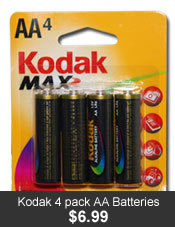 These are the most common non-rechargeable batteries. They are cheap, but they don’t do well in a digital camera because basically, they just can’t deliver the juice fast enough in a high current device like a digital camera. They may have high mAh ratings but they deliver very short operating times.
However, even if they appear flat in your digital camera, they may still easily run a low-drain device, such as a torch or clock. Kodak Oxy-Alkaline batteries will last longer than plain alkaline batteries over the short term and are a cheaper alternative to Lithium batteries. (Insert photo of batteries here)
Disposable Lithium
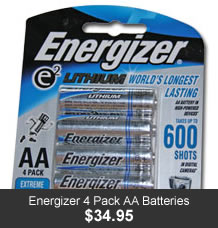 These batteries aren’t cheap, and they aren’t rechargeable either. However they do offer a big advantage – a shelf life of up to 10 years. For that reason, lithium AAs make great emergency spares.
You can be certain they will be ready whenever you need them and they work especially well under extreme temperatures of between -40⁰C-60⁰C. We recommend Energizer Lithium batteries if you choose to go down this path.
NiMh Rechargeable
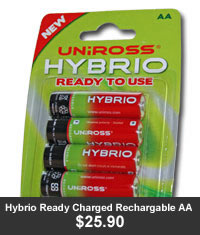 Nickel metal hydride batteries are the highest capacity rechargeable AA batteries and generally the best ones for digital cameras. The higher the mAh rating, the longer they will last – look for 1850mAh or higher. The down side of these batteries is that they will lose some of their charge every day, even if you don’t use them.
That means that if you get out the camera every few months only, the batteries may be dead when you need them – unless you remember to charge them first. Plan on replacing your rechargeable batteries about every 12-18 months, depending on how much you use them and how you charge them. It is more economical to buy four batteries at a time, rather than two, even if your camera only takes two batteries. Then two can be charging while you are using the other two.
Hybrid NiMH batteries on the other hand, are pre-charged, ready to use, rechargeable batteries. They hold 75% of their charge for up to a year, although they only store about 75% as much power as the best regular ones. But for situations where you only use a device occasionally, they are worth considering.
Lithium-Ion Rechargable
Lithium-ion batteries are the best type of camera battery. Specific camera models require specific lithium-ion batteries and so it is can be more expensive to buy a spare battery.
On the positive side, regardless of the weight or size of the battery, there is more capacity to store more energy than other types of rechargeable batteries in the marketplace.
While not as easily available as AA batteries, the batteries and chargers are a more compact size, and are often better for travelling.
Battery Chargers
When charging AA rechargeable batteries for the first time, charge them for the stated number of hours on the packaging. We then recommend you break the charge, charge them for another hour and then repeat for another hour. This allows you to get maximum charge on the batteries and is helpful in prolonging their life.
Rapid charging (anything under 2 hours) can be tricky. A rechargeable battery is designed to accept current at about 1/10th of the battery’s mAh rating. Force feeding a battery in a shorter time can reduce the total number of charges it can accept, as well as diminish its capacity. You can literally fry the batteries, overheating them beyond repair.
Even a slow charger can damage batteries if they are left on charge for days at a time. No battery likes to be overcharged and NiMH batteries are especially vulnerable to damage from long-term “trickle”charging.
Always Remember!
- Never charge different brands at the same time.
- Never charge a mix of old and new batteries at the same time.
- Never mix different mAh levels at the same time on the charger.
- Always allow your batteries to go completely dead before recharging them.
- Never try to charge non-rechargeable or alkaline batteries in a charger as they can overheat and even explode!